Project Overview
- Ports:
- Inverness Harbour, Scotland (UK) & Varberg, Sweden
- Industry:
- Marine / Commercial Shipping
- System:
- Berg Propulsion ECR3000 Controllable Pitch Propeller (CPP) Control System
- Scope:
- CPP Control Lever Position Fault Diagnosis, Potentiometer Replacement & Zero Calibration
- Visit 1:
- April 2023 — Inverness Harbour, Scotland
- Visit 2:
- May 2023 — Varberg Dock, Sweden
- Warranty:
- 12 months on all work delivered
The Challenge: CPP Control Lever Position Fault on a Commercial Vessel at Inverness
A commercial vessel berthed at Inverness Harbour, Scotland was reported to have a fault with its Controllable Pitch Propeller (CPP) control system. The vessel's onboard team — working through Scot Leader — reported that the Wing Port side control lever was not responding correctly to commanded pitch positions.
The Berg Propulsion ECR3000 HMI confirmed the fault precisely: a 20.7% position error was being recorded on the Wing Port control lever channel. The commanded pitch position and the actual feedback position were misaligned — a condition that prevents safe, reliable propulsion control and must be resolved before the vessel can operate at full capacity.
Diagnosing and resolving this fault required specialist knowledge of CPP analogue control architectures, potentiometer signal characteristics, and Berg ECR3000 calibration procedures — expertise that goes well beyond standard shipyard maintenance capability.
Key challenge: a live position error on a commercial CPP system — requiring specialist diagnosis and calibration at port, with minimal disruption to the vessel schedule.
Our Solution: CPP Potentiometer Diagnosis, Replacement and Calibration — Inverness to Varberg
Ashmit Engineering deployed an engineer to Inverness Harbour on 16th April 2023 to board the vessel and carry out a systematic investigation. Using our marine instrumentation and breakdown assistance capability, the team executed a structured four-stage investigation and repair spanning two countries:
On-board Fault Diagnosis — Inverness Harbour
Boarded the vessel and met the Captain and Chief Engineer. Investigated the Wing Port control lever: measured potentiometer connections, voltage, and resistance values against OEM specification. Checked Berg ECR3000 HMI for position feedback data across all channels — bridge, wing port, wing starboard, and ECR. Wing Port potentiometer resistance confirmed below rated value — worn sensor identified as root cause.
Second Failing Potentiometer Identified — Starboard Lever
During testing, the Starboard Wing Control Lever also showed resistance below OEM rated value with open resistance recorded during full-range operation — a second failing potentiometer confirmed. Both Wing Port and Starboard potentiometers flagged for replacement. Full findings documented in service report for the marine agent and vessel owner.
Parts Sourced and Follow-up Arranged — Varberg, Sweden
Correct replacement parts identified: Novotechnik P4504 S0060 precision potentiometers. Parts sourced and supplied. A second service visit was co-ordinated to Varberg Dock, Sweden — where the vessel was scheduled to berth — to carry out the physical replacement and zero-position calibration.
Replacement and Calibration Completed — Varberg
Boarded the vessel at Varberg on 18th May 2023. STBD wing potentiometer installed, tested and verified. On the PORT wing, moisture ingress and corrosion found on potentiometer terminals — wiring connections repaired and secured. Both levers tested with main engine running. Signal integrity verified on Berg ECR3000 HMI analogue input screen. Spare potentiometer left onboard for the crew.
Throughout both visits, Ashmit Engineering maintained full communication with the marine agent and vessel management — issuing detailed service reports with findings, outstanding actions, and recommendations. Additional findings were documented, including the ECR Local Station HMI password not being available in vessel records — with a recommendation to recover it via Berg Controls (Kongsberg).
Results Achieved
CPP Position Error Resolved
Both Wing Port and Starboard CPP control lever position errors corrected. Vessel returned to full propulsion control capability.
Root Cause Identified
Worn potentiometers and moisture ingress on terminal connections precisely identified and documented — clear maintenance record for the vessel owner.
Signal Integrity Verified
Control lever operation tested and verified with main engine running. All CPP HMI analogue input values confirmed correct across every channel.
Vessel Schedule Maintained
Both service visits co-ordinated around the vessel port schedule — Inverness and Varberg — minimising disruption and off-hire time.
Proactive Maintenance Identified
Half-yearly terminal check recommended for moisture ingress on STBD and PORT wing panels — preventing recurrence of the same fault.
Full Service Documentation
Detailed engineers reports issued for both visits — findings, test results, outstanding actions, and recommendations all recorded.
The vessel left Varberg with a fully functional CPP control system, a documented fault history, and a spare Novotechnik potentiometer onboard for future maintenance. The project demonstrated Ashmit Engineering's ability to provide specialist marine propulsion support across international ports — from initial diagnosis in Inverness to parts supply and commissioning in Sweden.
Project Photos
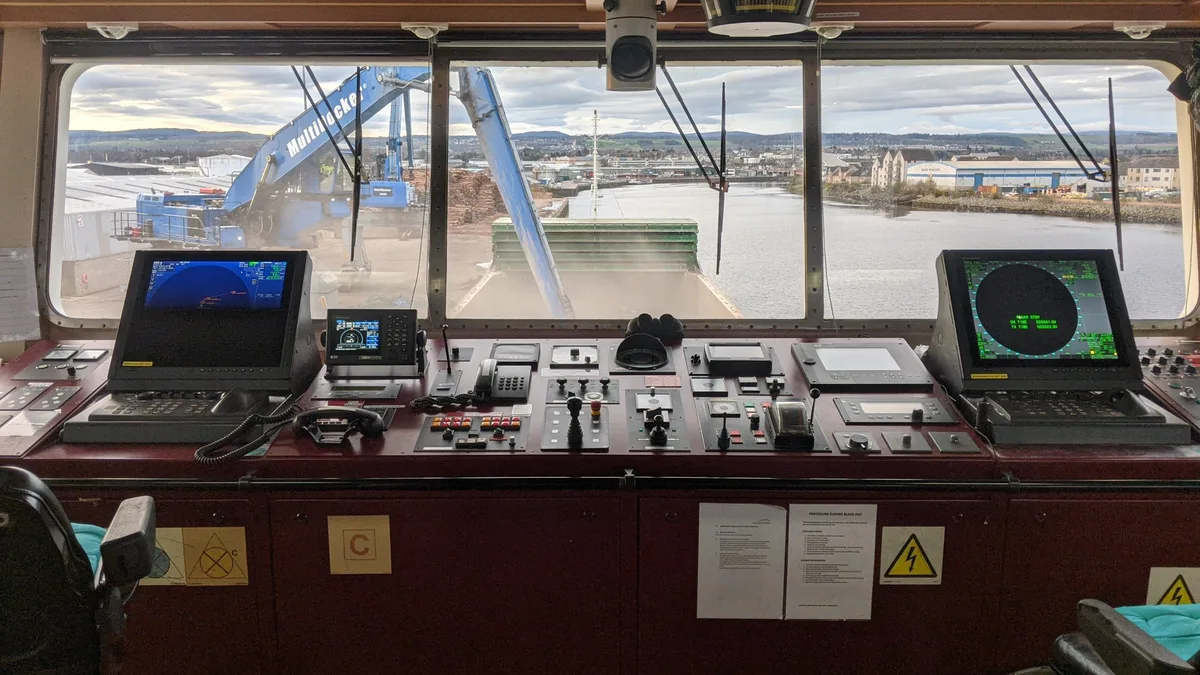
Marine Control Services Available in Inverness and Scotland
Available for vessel boarding and site visits at Inverness Harbour and ports throughout Scotland — typically within 48 hours. We work directly with vessel owners, marine agents, captains, and fleet managers.
Frequently Asked Questions
- Do you work in Inverness and Scotland?
- Yes. Ashmit Engineering engineers travel to ports throughout Scotland including Inverness Harbour. We can typically board a vessel and be on-site within 48 hours of your enquiry — and same-day for genuine emergencies. We also work internationally, including European ports.
- What is a Controllable Pitch Propeller (CPP) and how does the control system work?
- A Controllable Pitch Propeller (CPP) is a propulsion system where the blade angle (pitch) can be adjusted while the shaft rotates, allowing speed and direction control without changing engine RPM. The control system — such as the Berg Propulsion ECR3000 — uses position-feedback potentiometers in bridge and wing levers to command a hydraulic pitch actuator. The ECR monitors commanded versus actual pitch in real time.
- What causes CPP control lever position errors?
- The most common cause is worn or corroded feedback potentiometers inside the control lever housing. These sensors degrade over time — particularly in exposed wing positions where moisture ingress is common. When potentiometer resistance drifts from its rated value, the ECR detects a mismatch between commanded and actual pitch, triggering a position error alarm. Other causes include loose terminal connections and damaged wiring.
- Can you support marine agents arranging urgent CPP repairs?
- Yes — we work regularly with marine agents co-ordinating repairs for vessels in port. We can provide rapid engineer deployment, parts sourcing (including Novotechnik and other OEM-equivalent potentiometers), and all required service documentation. Contact us on +44 20 3129 5414 to arrange.
- Do you support Berg Propulsion systems?
- Yes. We have hands-on experience with Berg Propulsion ECR3000 CPP control systems including lever calibration, potentiometer replacement, signal integrity diagnosis, and bow thruster fault investigation. We also support KaMeWa, Wartsila, MAN, Voith, Schottel, Brunvoll, and other major CPP manufacturers.
- What is a zero-position calibration on a CPP control lever?
- After replacing a feedback potentiometer, a zero-position calibration sets the sensor's electrical zero to match the physical zero-pitch position of the propeller. Without it, the system shows an offset error even with a correctly installed new sensor. Calibration involves physically confirming the propeller is at zero pitch, then setting the corresponding zero point in the ECR control system.
- How much does a CPP control system fault investigation cost?
- Cost depends on fault complexity, parts required, port location, and vessel schedule. We provide a clear scope and estimate before any work begins. Contact us on +44 20 3129 5414 or via our enquiry form for a fast response.
Similar Projects by Ashmit Engineering
Get Support for Marine CPP or Propulsion Control Issues
Our engineers work with vessels at ports throughout Scotland, the UK, and internationally. Whether you need urgent fault diagnosis, a marine instrumentation specialist, or planned control system upgrade support, we can typically be on-site within 48 hours of your enquiry.