HV Switchboard Specialists
Siemens S5 / S7 PLC Recovery
Emergency Generator Commissioning
24/7 Emergency Response
Cross-Channel Ferry Electrical
HV Electrical Switchboard Troubleshooting and Emergency Generator PLC Recovery — Pride of Burgundy, Dover
In August 2022, Ashmit Engineering was engaged to carry out specialist electrical support on board the Pride of Burgundy — a P&O Ferries Cross-Channel RoPax ferry operating the high-cycle Dover–Calais route — whilst the vessel was berthed at the Port of Boulogne-sur-Mer.
The job covered three distinct but related systems: HV electrical switchboard investigation, recovery and backup of an obsolete Siemens SIMATIC S5-100U PLC controlling emergency generator No. 4, and fault-finding and rectification of the emergency generator auto-start circuit. A seized contactor in the generator start circuit was identified and replaced, and the PLC program was successfully recovered using STEP 5 software before the ageing controller was decommissioned from that circuit.
This case study illustrates Ashmit Engineering's capability in marine HV electrical fault-finding, obsolete PLC recovery and decommissioning, and emergency generator commissioning — skills that are critical for high-cycle ferry operations where vessel availability is paramount.
Project Overview — Pride of Burgundy, Dover
- Vessel
- Pride of Burgundy (P&O Ferries — Cross-Channel RoPax Ferry)
- Route
- Dover–Calais (English Channel)
- Location
- Port of Boulogne-sur-Mer, France / Port of Dover, Kent, UK
- Industry
- Marine / Cross-Channel Passenger & Freight Ferries
- Systems
- HV Electrical Switchboard, Siemens SIMATIC S5-100U PLC, Emergency Generators
- PLC
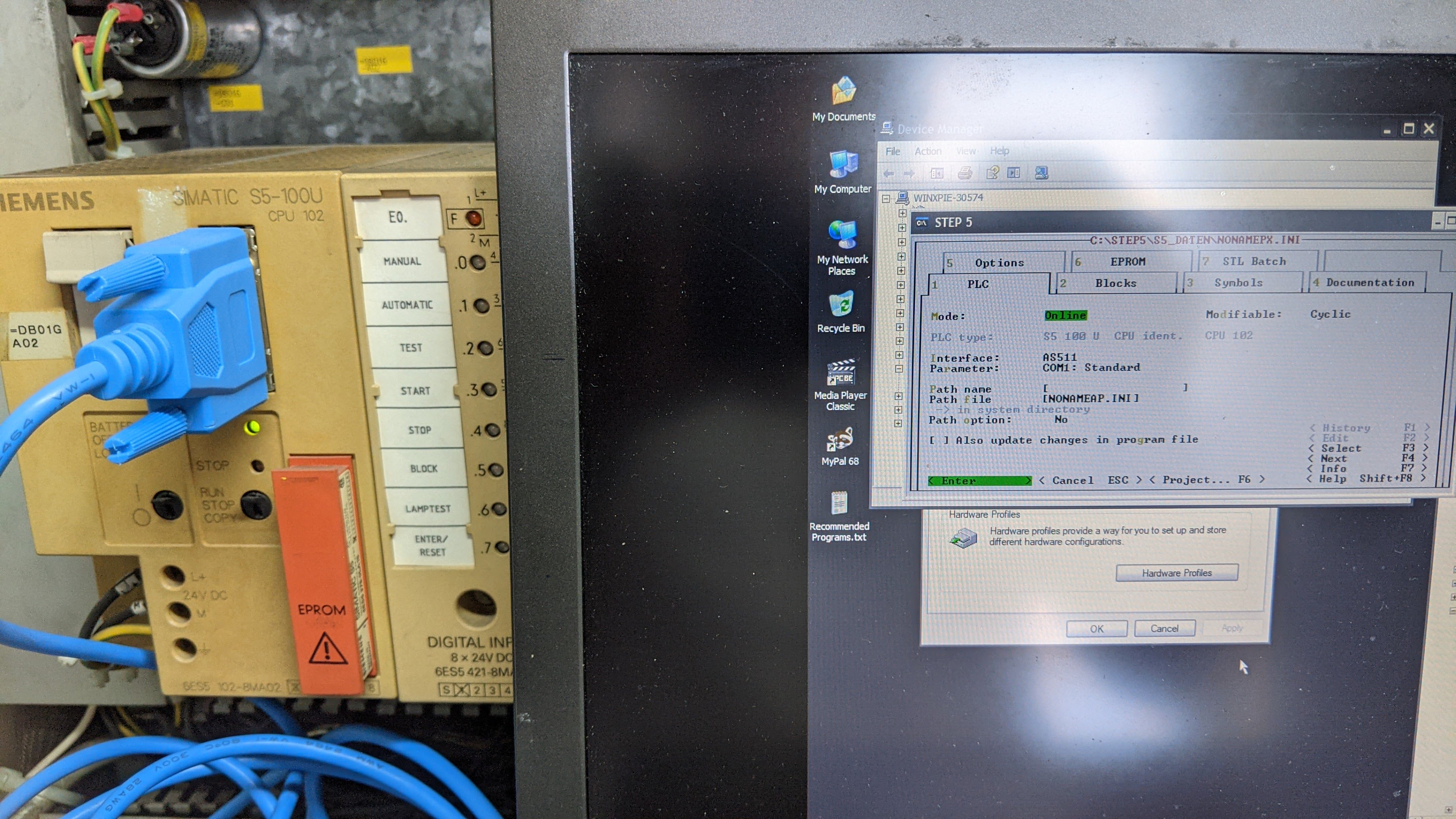
- Siemens SIMATIC S5-100U (CPU 102) — Emergency Generator No. 4 Control
- Scope
- HV switchboard troubleshooting, PLC software recovery (STEP 5), obsolete PLC decommissioning, seized contactor replacement, emergency generator recommissioning and auto-start verification
- Date
- 30–31 August 2022
Site Photography — Pride of Burgundy, Dover / Boulogne-sur-Mer
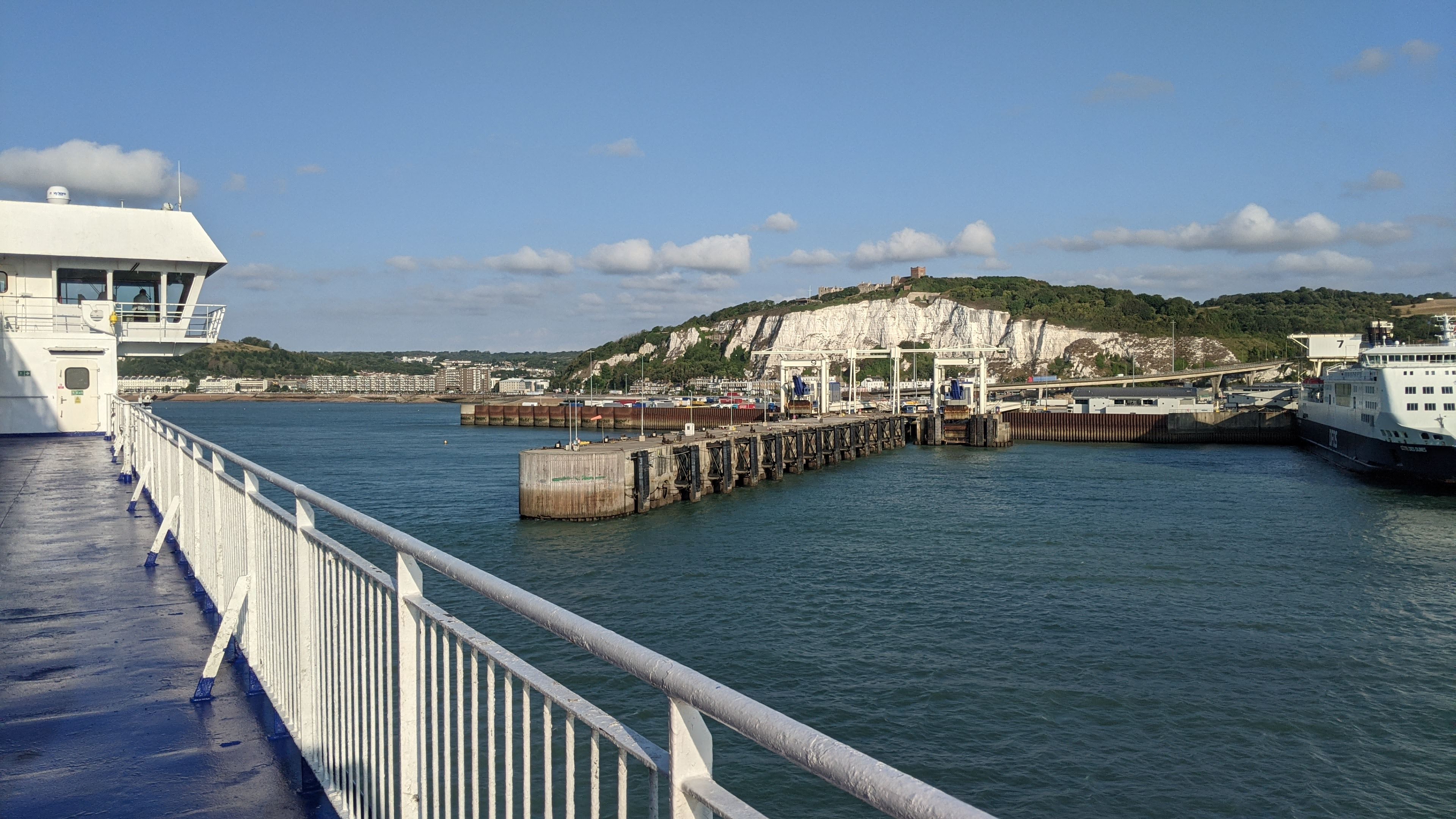
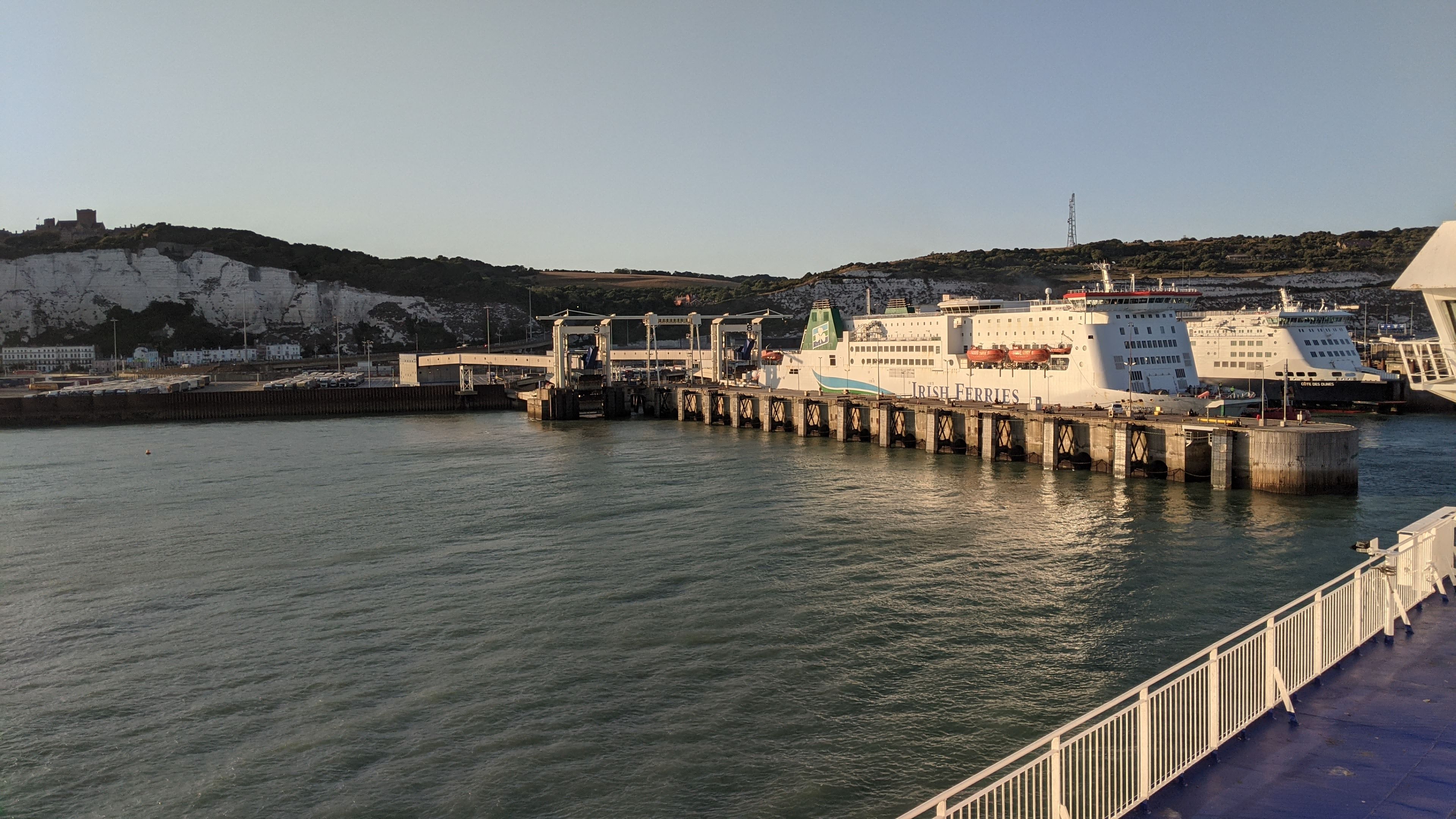
Dover Eastern Docks — Pride of Burgundy operating the high-cycle Dover–Calais route, White Cliffs visible
The Challenge: High-Cycle Ferry Electrical Systems and Obsolete PLC Control
Cross-Channel ferries operating the Dover–Calais route are among the most intensively cycled vessels in the world — completing multiple round trips per day, every day of the year. This operational intensity places extreme demands on electrical components, particularly in systems that must perform reliably every time the vessel is manoeuvred: emergency generator auto-start circuits, HV switchboard protection systems, and auxiliary control PLC hardware.
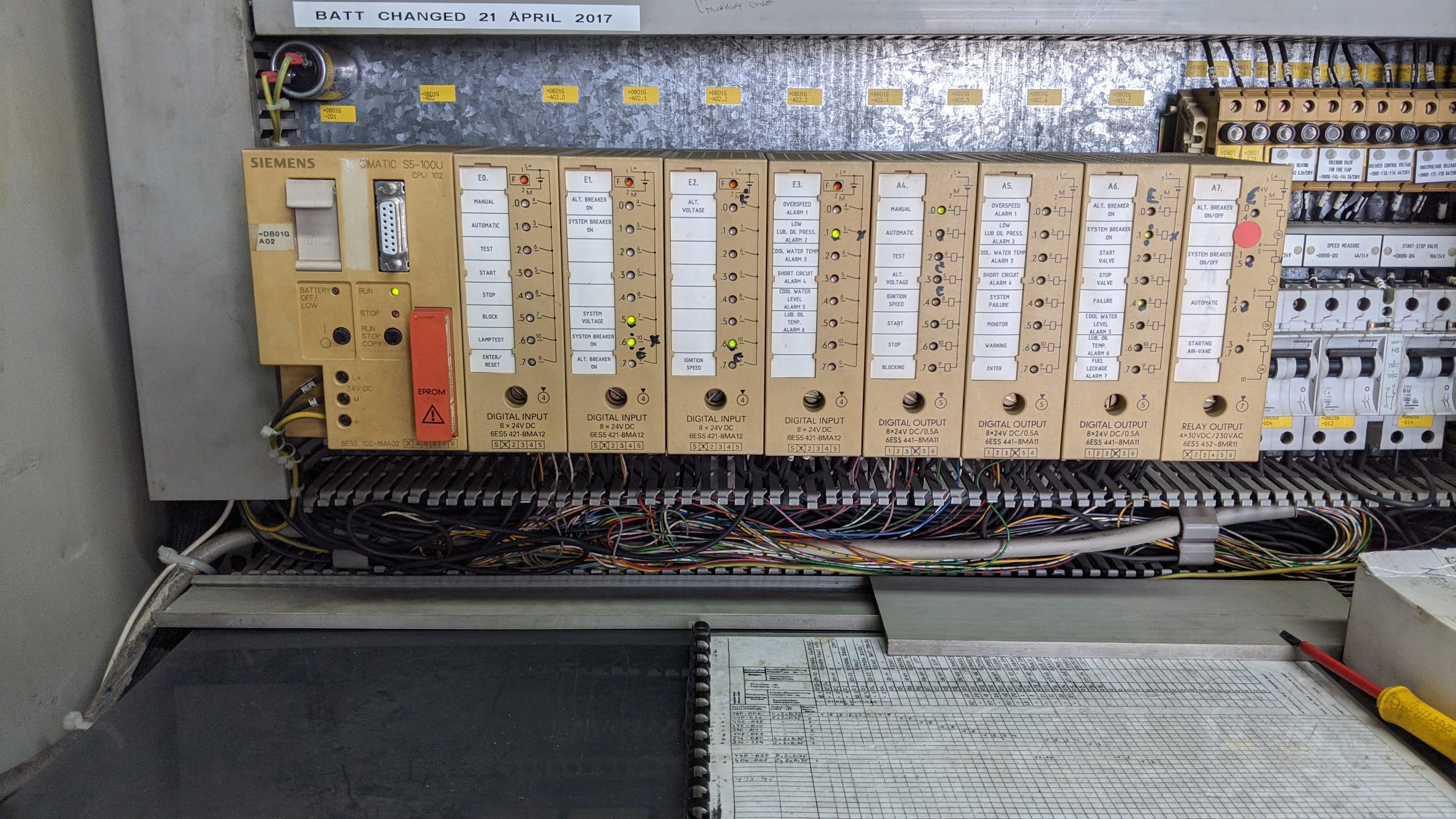
The Pride of Burgundy was fitted with a Siemens SIMATIC S5-100U PLC— a controller from the late 1980s/early 1990s — to manage the control and alarm logic for emergency generator No. 4. With the S5 series long discontinued by Siemens and spare parts increasingly difficult to source, the vessel faced a critical challenge: the PLC program had not been backed up, the EPROM battery was ageing (last replaced April 2017), and a fault had developed in the emergency generator auto-start circuit. If the PLC failed completely, the program — and with it the generator's automatic control logic — would be lost permanently.
Simultaneously, the HV electrical switchboard required investigation for reported anomalies. With the vessel operating a high-frequency sailing schedule, all work had to be completed within a port call — under time pressure, with no margin for extended downtime.
Technical Solution — Step by Step
1
HV Electrical Switchboard Investigation
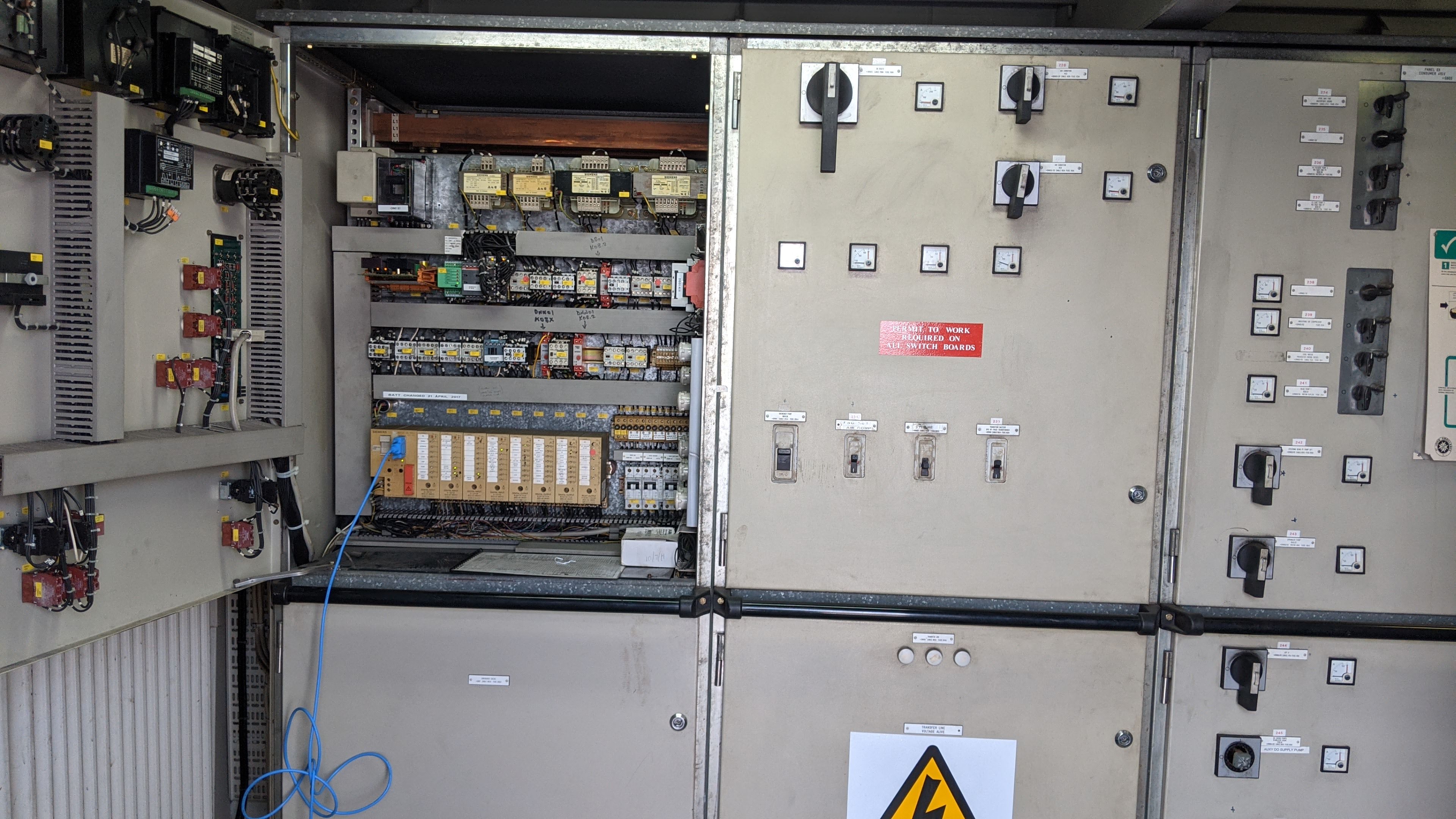
On arrival at the Port of Boulogne-sur-Mer, Ashmit Engineering conducted a full inspection of the HV electrical switchboard in the vessel's main switchboard room. The switchboard was opened, sections isolated in accordance with vessel safe working procedures, and a systematic inspection of the protection relay settings, contactor condition, busbar connections, and cable terminations was carried out. The investigation identified areas requiring attention and informed the decision to focus remedial work on the emergency generator control circuit.
2
Siemens S5-100U PLC Program Recovery Using STEP 5
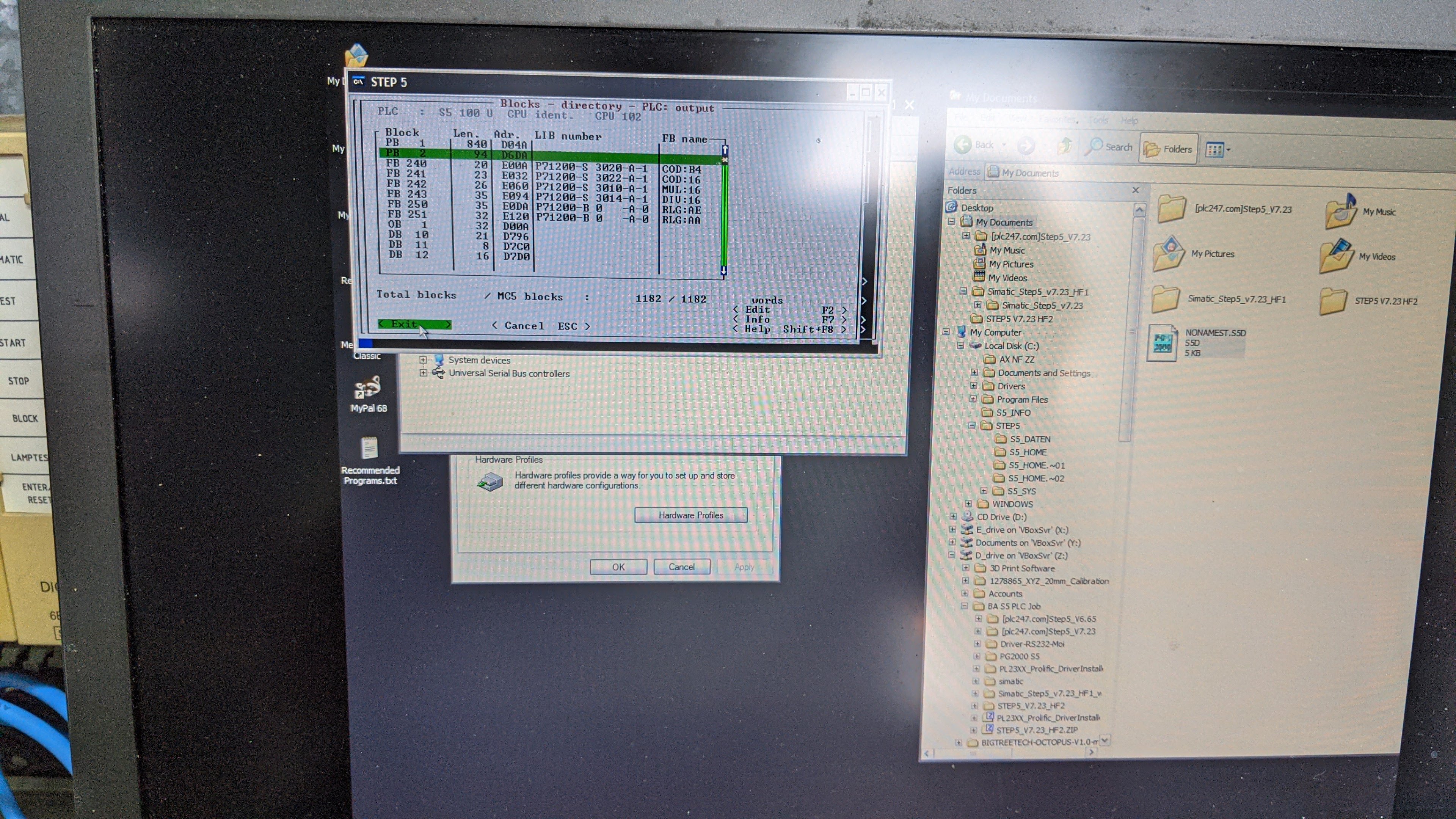
The Siemens SIMATIC S5-100U (CPU 102) controlling emergency generator No. 4 had no documented backup of its program — a critical risk on an obsolete system with an ageing EPROM battery. Ashmit Engineering connected to the PLC using a STEP 5 programming interface via PC and established an online session with the CPU. The full block directory was uploaded: 1182 total blocks confirmed, including Function Blocks (FB 240–251), Data Blocks (DB 1–12), and the I/O configuration across four Digital Input modules (E0–E3) and four Digital Output / Relay Output modules (A4–A7). The complete program was backed up to secure storage — preserving the control logic for future use in either repair or migration work.
3
Emergency Generator Auto-Start Circuit Fault-Finding
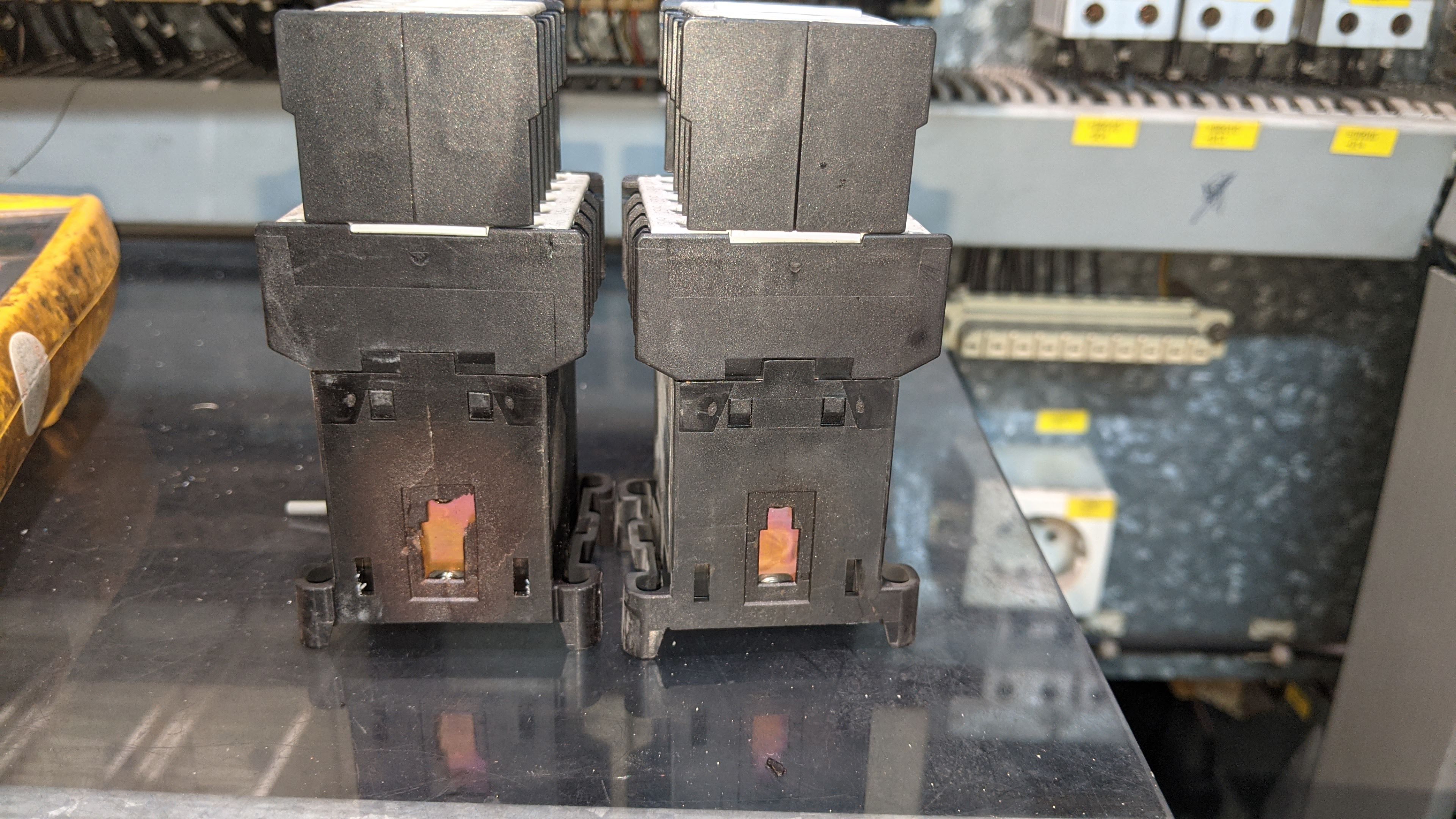
With the PLC program secured, Ashmit Engineering turned to the fault in the emergency generator auto-start circuit. A systematic trace of the control circuit — from PLC output module through the contactor wiring — identified contactor =DNN01-K04.1 as the point of failure. The contactor, located in the DNN01 generator control section, had seized: internal contact surfaces were burnt and the mechanism was no longer operating freely. This was preventing the PLC output from energising the generator start solenoid, blocking the auto-start sequence entirely. The fault was consistent with the high-cycle duty of a Cross-Channel ferry — contactors in start circuits can fail from repeated operation fatigue at a rate far exceeding vessels on slower routes.
4
Contactor Replacement and Circuit Restoration
The failed contactor =DNN01-K04.1 was de-energised, safely isolated, and removed from the panel. A replacement contactor of the correct specification was sourced and fitted. All terminal connections were remade and checked. The generator control circuit was then verified end-to-end: PLC output signal, contactor energisation, fuel solenoid activation, and start relay operation were each confirmed in sequence before proceeding to live testing.
5
Emergency Generator Commissioning and Auto-Start Verification
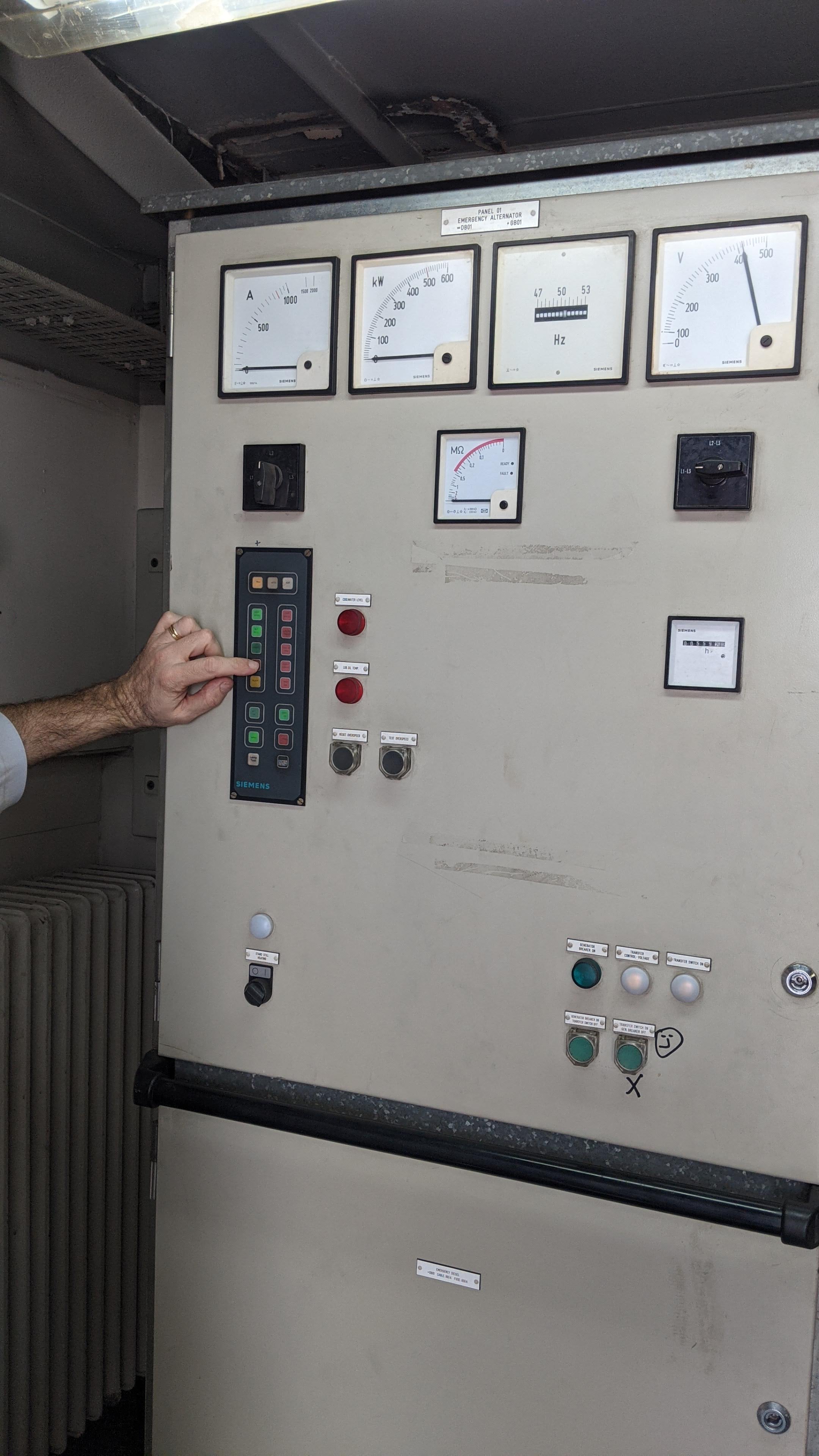
With the circuit repaired, Ashmit Engineering carried out full emergency generator commissioning. The generator was started in manual mode to confirm mechanical and electrical integrity — voltage (V), frequency (Hz), power output (kW), and current (A) were all verified against the Siemens switchboard instruments and confirmed within normal operating parameters. Auto-start mode was then tested: the PLC was commanded to initiate the start sequence, and the generator started, built voltage, and connected to the emergency busbar correctly. Multiple auto-start cycles were run to confirm repeatable, reliable operation. The Siemens emergency generator panel was fully recommissioned and signed off.
6
PLC Decommissioning and Handover Documentation
Following successful commissioning of the repaired circuit, the Siemens S5-100U PLC was formally decommissioned from the generator auto-start control function. The backed-up program was provided to the vessel's technical team along with a full service report documenting the fault found, components replaced, test results, and recommendations for the next maintenance interval — including consideration of a controlled S5 to S7 PLC migration to eliminate the risk of obsolete hardware failure in future.
Technical Note — Why High-Cycle Ferry Electrical Systems Fail Faster
The Dover–Calais route is one of the world's busiest ferry crossings, with vessels completing up to eight return sailings per day. Each port entry and departure cycles the HV switchboard, generator controls, and bow thruster systems through a full start-stop sequence. Over a year, a Dover–Calais ferry may accumulate more switching operations than a deep-sea vessel does in a decade. Contactors, circuit breakers, and relay contacts rated for 100,000 operations can reach end-of-life within two to three years on this route. Preventive inspection and replacement — rather than reactive fault response — is the correct maintenance strategy for these vessels.
Outcome
💾
PLC Program Recovered
Complete Siemens S5-100U program backed up — 1182 blocks preserved. No program data lost despite ageing EPROM battery on obsolete hardware.
⚡
Auto-Start Fault Resolved
Seized contactor =DNN01-K04.1 identified, replaced, and circuit restored. Emergency generator auto-start sequence verified through multiple test cycles.
✅
Generator Recommissioned
Emergency generator No. 4 fully recommissioned — voltage, frequency, kW output, and auto-start all verified and signed off on the Siemens switchboard.
📋
Full Documentation Provided
Service report with fault details, components replaced, test results, and S5-to-S7 migration recommendation delivered to vessel technical management.
Marine Electrical Engineering Services — Dover and UK Ports
Available for vessel callouts at Dover, Folkestone, and all UK Channel ports — typically within 48 hours. We work directly with vessel owners, marine agents, fleet managers, and port operators.
Ferry Fault? HV Electrical Issue? Generator Not Starting?
Ashmit Engineering provides 24/7 emergency marine electrical support for Cross-Channel ferries, RoPax vessels, and passenger ships in UK ports. We cover HV switchboard faults, PLC failures, and emergency generator issues — including obsolete Siemens S5 systems.
Frequently Asked Questions — Marine Electrical Support at Dover
- Do you work on vessels at Dover and Channel ports?
- Yes. Ashmit Engineering engineers travel to Dover, Folkestone, Newhaven, Portsmouth, and all UK Channel and South Coast ports. We can typically board a vessel within 48 hours — and same-day for genuine emergencies affecting vessel availability. We also travel internationally, including to French ports such as Boulogne-sur-Mer and Calais.
- Can you support Siemens SIMATIC S5 PLC systems on older vessels?
- Yes — this is a speciality. The Siemens S5 series (S5-90U, S5-95U, S5-100U, S5-115U, S5-135U, S5-155U) was widely installed on vessels built in the 1980s and 1990s and is now obsolete with no manufacturer support. Ashmit Engineering can connect to these systems using STEP 5 software, recover or back up the existing program, diagnose faults, and either repair the existing PLC or plan a controlled migration to a modern Siemens S7 or equivalent system.
- What is HV switchboard troubleshooting on a ferry?
- High-voltage (HV) switchboard troubleshooting involves diagnosing faults in the primary power distribution equipment on board — typically 3.3 kV, 6.6 kV, or 11 kV switchgear. On Cross-Channel ferries, HV systems power the main propulsion drives, bow thrusters, and hotel load distribution. Faults may include protection relay trips, contactor or circuit breaker failures, insulation faults, or control system failures. Ashmit Engineering carries out full electrical fault diagnosis, isolation, and repair on marine HV switchboards.
- Why do emergency generators fail to auto-start on Cross-Channel ferries?
- Emergency generator auto-start failures on older ferries are commonly caused by: failed or seized contactors in the start circuit, degraded PLC I/O modules, faulted battery charger circuits, or loss of fuel solenoid control signal. On high-cycle vessels like the Pride of Burgundy — running multiple crossings per day — wear on electrical components accelerates significantly. Ashmit Engineering has experience tracing and resolving all of these failure modes, including on Siemens S5-controlled generator systems.
- Can you decommission an old PLC and upgrade to a modern system?
- Yes. Our standard approach is: (1) connect to the existing system using legacy programming software (STEP 5 for Siemens S5, RSLogix for Allen-Bradley SLC/PLC-5) and recover the current program, (2) document all I/O, interlocks, and control sequences, (3) design and build a replacement panel with a modern PLC, (4) commission the new system, with the old system as fallback until sign-off. We can manage this process from FEED through FAT and SAT — including class society notification if required.
- How quickly can you respond to a generator failure at Dover?
- Dover is within our rapid-response coverage area. For emergency generator failures or HV electrical faults, we aim to have an engineer on board within 24 hours of your first call — often same-day for vessels with a sailing deadline. Call our 24/7 line on +44 20 3129 5414 and state it is an emergency callout.
- Do you work with P&O Ferries, DFDS, and other ferry operators?
- Ashmit Engineering works with vessel owners, marine agents, and fleet managers across all ferry operators serving UK ports. We are independent marine electrical engineers and do not require an existing framework agreement — we can mobilise at short notice on the instruction of the shipowner, master, or authorised agent.
Related Case Studies and Services
Enquire About Marine Electrical Support at Dover
Whether your vessel is in Dover, Folkestone, Newhaven, or any UK Channel port — contact Ashmit Engineering for HV switchboard fault-finding, legacy PLC recovery, and emergency generator support.