We provide complete end-to-end repairs and maintenance for azimuth drives — including ABB ACS600 and ACS800 variable-frequency drive series widely used to power bow thrusters and azimuth propulsion systems. Our certified engineers handle diagnostics, component-level repairs, spare parts supply, system upgrades, and rapid fault recovery — on-site at your vessel or in our workshop — to minimise downtime and restore reliable propulsion and maneuvering performance.
Whether you are dealing with a WatchdogBypassed alarm, a THR Fault Converter Tripped, an Azimuth Converter Communication Fault, or a vessel stuck in port with a failed drive module, our engineers respond fast, diagnose accurately, and fix right first time.
What Is a Bow Thruster?
A bow thruster is a transversal propulsion device mounted at or near the bow (front) of a vessel that produces lateral — sideways — thrust. Unlike the main propeller and rudder, which generate forward or reverse drive, the bow thruster pushes the bow of the ship to port or starboard independently of vessel speed or heading.
This lateral force transforms what would otherwise be a cumbersome manoeuvre into a controlled, precise movement. Docking a 150-metre ferry in a cross-wind, holding an offshore support vessel on station above a subsea installation, or nudging a bulk carrier clear of a pier — all of these become significantly safer and more manageable when a bow thruster is operating correctly.
The term azimuth thruster is often used interchangeably with azimuth drive in engineering contexts. An azimuth thruster is a full 360°-rotating propulsion pod, while a bow thruster more narrowly refers to a transverse tunnel unit. However, both rely on the same family of variable-frequency drives — the ABB ACS600 and ACS800 — to control the electric motor that spins the propeller.
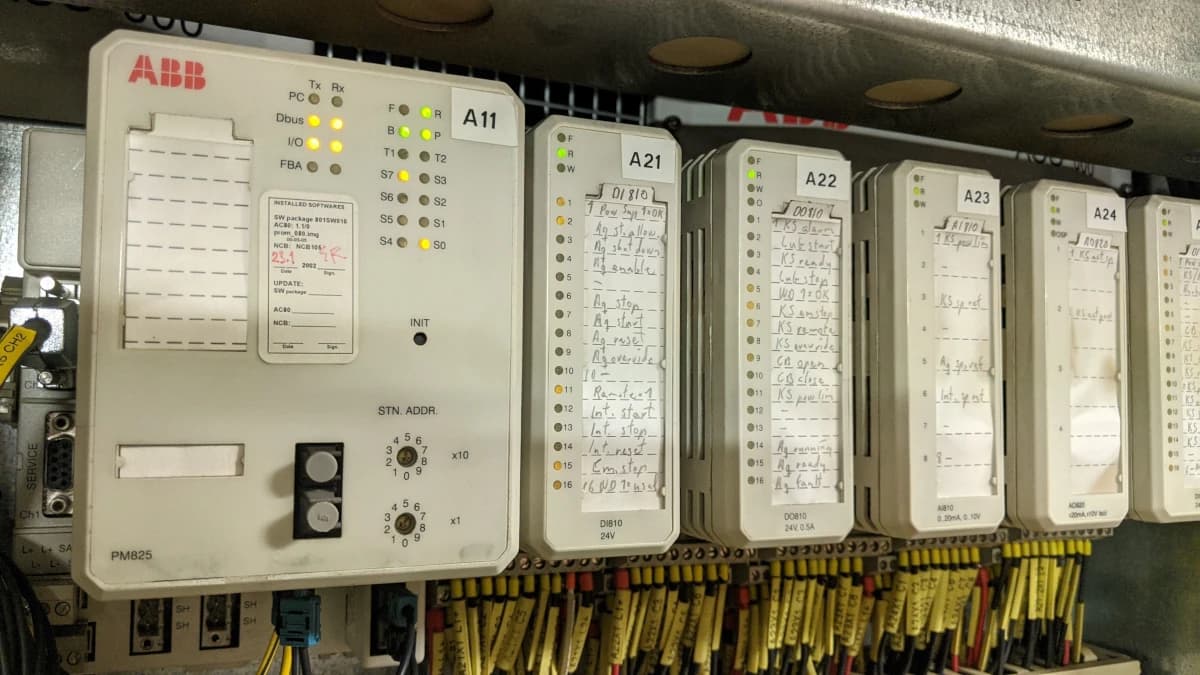
Types of Bow Thruster
Not all bow thrusters are the same. The correct unit type for a vessel depends on hull form, power requirement, operating profile, and available installation space. Understanding the differences matters when diagnosing faults, ordering spare parts, or planning an upgrade.
Tunnel (Fixed) Thruster
The most common type on commercial and leisure vessels. A transverse tube — the tunnel — passes through the hull below the waterline, with a propeller mounted at its centre. When the motor runs, water is accelerated through the tunnel, pushing the bow sideways.
Tunnel thrusters are simple, reliable, and cost-effective. They are fixed — they can only produce thrust perpendicular to the vessel centreline. Power range: typically 15 kW to 2,500 kW for commercial vessels.
Azimuth (Rotating) Thruster
An azimuth thruster can rotate through a full 360°, directing thrust in any horizontal direction. This makes it far more versatile than a tunnel unit — a single azimuth thruster can provide forward, reverse, and lateral thrust simultaneously by vectoring its output.
Azimuth thrusters are used as both primary propulsion and manoeuvring devices on tugs, offshore support vessels, ferries, and dynamic-positioning (DP) vessels. Their electric motors are driven by the ACS600 or ACS800 variable-frequency drive, allowing precise speed and torque control across the full rotational range.
Retractable / Deployable Thruster
A retractable thruster is lowered below the hull when needed and retracted into the hull when underway, eliminating hydrodynamic drag at sea. These are common on high-value merchant vessels, some yachts, and vessels where fuel efficiency at cruising speed is critical.
The deployment mechanism — a hydraulic or electro-mechanical drive system — is itself a maintenance item, and retractable thrusters add complexity to the overall system that tunnel units do not.
Waterjet Transverse Thruster
Used on fast ferries and high-speed craft where tunnel propellers would cause excessive cavitation at operating speeds. A pump accelerates water laterally through a nozzle, generating transverse thrust without a rotating propeller in the tunnel.
| Type | Thrust Direction | Typical Power | Common Application |
|---|---|---|---|
| Tunnel (fixed) | Transverse only | 15 kW – 2,500 kW | Ferries, OSVs, yachts, cargo vessels |
| Azimuth (360°) | Any direction | 200 kW – 5,000 kW+ | Tugs, DP vessels, offshore, ferries |
| Retractable | Transverse | 100 kW – 3,000 kW | Merchant ships, luxury yachts |
| Waterjet transverse | Transverse | 500 kW – 2,000 kW | Fast ferries, high-speed craft |
How a Bow Thruster Works
The operating principle is straightforward: a propeller accelerates water in one direction, and by Newton's third law, the vessel experiences an equal and opposite force. When water is pushed to starboard, the bow moves to port.
In practice, the control chain is more complex:
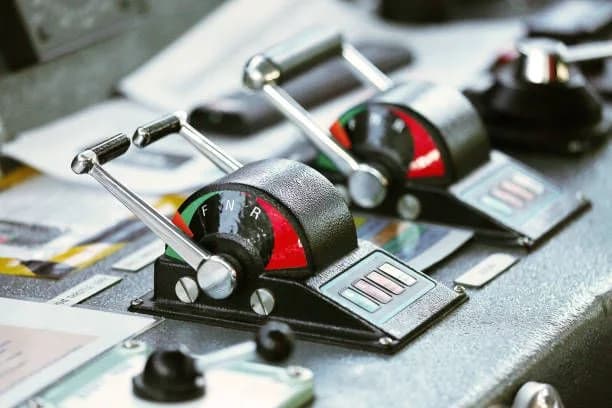
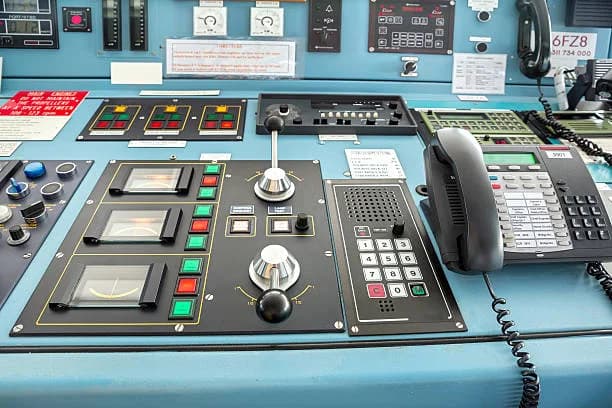
- Bridge command — The officer of the watch moves the thruster joystick or lever to the desired direction and demand level (0–100%).
- Control system — The thruster control panel (often a dedicated PLC or the vessel's dynamic positioning computer) translates the demand into a speed reference signal.
- Variable-frequency drive (VFD) — The ACS600 or ACS800 drive receives the speed reference and modulates the frequency and voltage of the AC power delivered to the thruster motor. More frequency = higher motor RPM = more thrust.
- Electric motor — The AC induction motor (or, on newer installations, a permanent-magnet motor) converts electrical power to rotational mechanical power.
- Propeller / gearbox — The motor drives the propeller shaft — directly, via a right-angle gearbox, or through a belt/coupling — producing the desired thrust vector.
- Feedback — Motor current, speed, temperature, and drive status signals are returned to the bridge display and the vessel's alarm management system.
Drive Types for Bow Thrusters — Electric, Hydraulic, and ACS600 / ACS800
The drive system is the power source and control mechanism for the thruster motor or hydraulic pump. Selecting and maintaining the correct drive type is fundamental to thruster performance.
Electric Variable-Frequency Drive (VFD) — ACS600 and ACS800
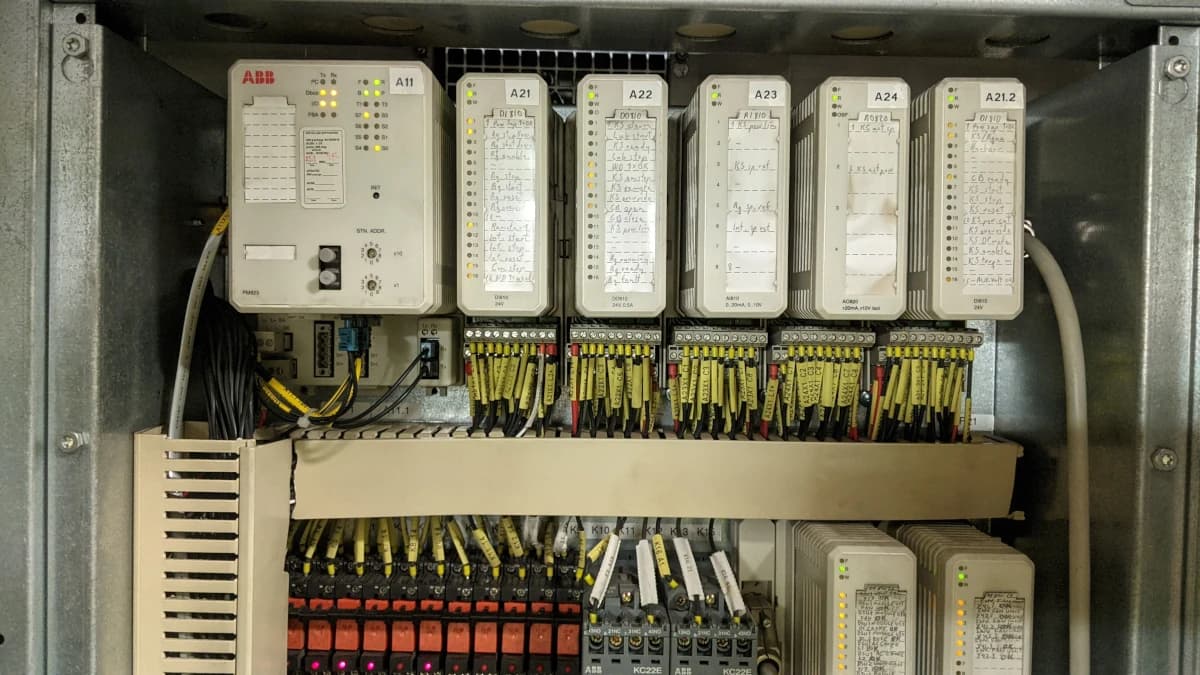
The majority of modern electrically driven bow thrusters use a variable-frequency drive to control the AC induction motor. The ABB ACS600 and its successor, the ACS800, are the industry-standard drives for marine thruster applications worldwide.
Both drives use ABB's patented Direct Torque Control (DTC) to deliver:
- Precise, stepless speed control from zero to full RPM
- Rapid torque response for fast direction reversals in close-quarters manoeuvring
- Motor protection against overload, phase loss, and overtemperature
- Full diagnostic logging of alarms, fault codes, and operating history
- Communication interfaces: fieldbus (PROFIBUS, Modbus, DeviceNet) and hardwired I/O
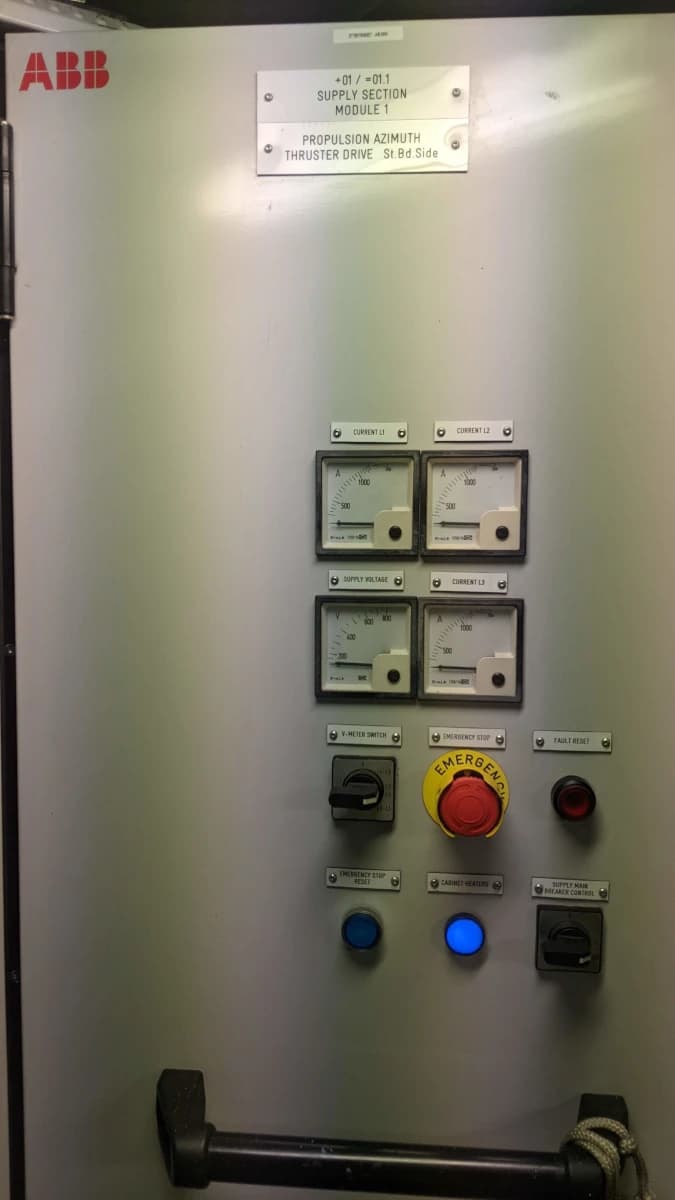
ACS600 — The Legacy Drive
The ACS600 was introduced in the 1990s and was widely adopted across marine thruster installations throughout the 2000s. It remains in service on a large number of vessels today.
ABB has declared the ACS600 as a legacy (end-of-life) product. Spare parts — particularly IGBT power modules, control boards (RMIO, AINT, AINT), and gate driver cards — are becoming increasingly scarce through official channels. This makes specialist repair and refurbishment of existing ACS600 drives critical for vessels that cannot yet justify a full drive replacement.
Ashmit Engineering holds stock of ACS600 compatible components and can source OEM-equivalent parts for most sub-assemblies in the drive — including power modules, control cards, cooling fans, and capacitor banks.
ACS800 — The Current Standard
The ACS800 replaced the ACS600 as ABB's standard marine-grade VFD. It offers improved diagnostics, better harmonic filtering options (via the integrated ARBN brake chopper and du/dt filter options), enhanced communications, and a modular cabinet architecture that simplifies maintenance.
ACS800 drives are available in a wide power range — from the single-drive ACS800-01 through to the multi-drive cabinet configurations (ACS800-07, ACS800-17, ACS800-37) used in high-power thruster installations and main azimuth propulsion systems.
Despite being a current-generation product, ACS800 drives can still develop faults — particularly in marine environments where humidity, vibration, salt-air corrosion, and transient power events stress the power electronics over time.
Hydraulic Drive
Hydraulic thruster drives use a variable-displacement hydraulic pump driven by the vessel's main engine or a dedicated electric motor to supply pressurised fluid to a hydraulic motor at the thruster. This removes the need for high-current electrical cabling to the thruster motor but requires a hydraulic power unit (HPU), pipework, and control valves.
Hydraulic drives are more common on vessels where the thruster must draw power from the main engine rather than the ship's electrical system — workboats, fishing vessels, and some offshore vessels. Maintenance focus shifts to HPU condition, hydraulic oil quality, and proportional valve health rather than power electronics.
| Drive Type | Control Method | Typical Applications | Maintenance Focus |
|---|---|---|---|
| ABB ACS600 (legacy) | DTC variable-frequency | Ferries, OSVs, legacy fleet | IGBT modules, control boards, capacitors |
| ABB ACS800 (current) | DTC variable-frequency | Modern vessels, DP ships | Power modules, cooling, firmware, IGBT gates |
| Hydraulic (HPU) | Variable displacement pump + proportional valve | Workboats, fishing, offshore | HPU, oil quality, proportional valves, seals |
| Diesel-mechanical | Direct engine coupling / belt drive | Small craft, emergency backup | Coupling, belts, engine RPM governor |
Bow Thruster and Azimuth Drive Manufacturers
The thruster unit and the drive powering it are typically supplied by different manufacturers. Understanding which OEM made each component is essential when ordering spare parts, finding documentation, or diagnosing obscure fault codes.
Drive Manufacturers (ACS600 / ACS800)
- ABB Marine & Ports — The primary manufacturer of the ACS600 and ACS800 drives used across the vast majority of electric-drive marine thrusters globally. ABB also manufactures the Azipod® pod propulsion system, which uses the same drive family in much higher power ratings.
- Siemens — Siemens SIMOVERT and SINAMICS drive families are used in some thruster installations, particularly on vessels with Siemens-integrated automation.
- Danfoss / Vacon — Vacon NX Marine drives are used on some thruster installations, particularly in Scandinavian-built vessels.
Thruster Unit Manufacturers
- Kongsberg Maritime / Rolls-Royce Marine — Tunnel and azimuth thrusters for offshore, naval, and commercial vessels. Widely integrated with ABB ACS800 drives.
- Wärtsilä — Comprehensive range of tunnel and azimuth thruster units for merchant shipping and offshore.
- Brunvoll — Norwegian manufacturer of high-performance azimuth and tunnel thrusters, often found on advanced DP vessels and ferries.
- Schottel — German manufacturer known for the SRP (Schottel Rudderpropeller) azimuth drive system, widely used on tugs and workboats.
- Thrustmaster of Texas — US manufacturer of hydraulic and electric tunnel and azimuth thrusters for offshore and workboat markets.
- Side-Power / Sleipner — Market leader for yacht and small commercial vessel tunnel thrusters.
- Voith — Manufacturer of the Voith Schneider Propeller (VSP), a cycloidal propeller system used on tugs and ferries that provides 360° vectored thrust without a separate rudder.
Vessel Types That Use Bow Thrusters
Bow and azimuth thrusters are found across the full range of commercial and specialist vessel types — from superyachts to large container ships. The specific installation varies significantly by vessel class.
- Ferries and RoPax vessels — Tunnel thrusters fore and aft for precise berthing in port without tug assistance. Often electric drives (ACS800) running from the vessel's main switchboard.
- Offshore Support Vessels (OSVs) — Multiple azimuth thrusters forming part of a DP system. ACS600 and ACS800 drives are standard on vessels built from the 1990s through to the present.
- Tugboats — Azimuth thrusters (Schottel, Rolls-Royce, Wärtsilä) provide the 360° thrust vectoring that gives modern tugs their exceptional maneuverability. ACS800 drives used on electric and diesel-electric tug designs.
- Platform Supply Vessels (PSVs) — Similar to OSVs; often DP2 or DP3 classified, requiring multiple independent azimuth thruster systems each with a dedicated drive.
- Container and bulk carriers — Larger merchant vessels typically fit tunnel thrusters at the bow for port entry. These are often lower-power installations (ACS600, now ageing) that are candidates for ACS800 upgrades.
- Cruise and passenger ships — Multiple bow and stern thrusters, often with azimuth pod propulsion (ABB Azipod®) supplemented by tunnel bow thrusters. High-power ACS800 multi-drive cabinet installations.
- Yachts and superyachts — Electric tunnel thrusters with smaller VFD drives. Side-Power, Sleipner, and similar units.
- Pilot vessels and patrol boats — Azimuth drives for tight-quarters manoeuvring and rapid response.
- Cable-laying and survey vessels — DP-equipped vessels with multiple azimuth thrusters and retractable units for precise station-keeping during subsea operations.
Our Azimuth Drive Services — End-to-End Repairs, Parts and Upgrades
Ashmit Engineering provides a complete, end-to-end service for azimuth drives and bow thruster drive systems — from the first fault call to post-service support. Our engineers are experienced with both ACS600 and ACS800 platforms across the full range of marine installations.
Diagnostics & Fault Analysis
Accurate diagnosis is the foundation of every effective repair. Our diagnostic process covers the full drive system — not just the power electronics.
- Drive fault log review — Reading active and historical fault codes from the ACS600/ACS800 control panel and parameter memory to build a fault timeline
- Electrical testing — Insulation resistance testing, IGBT integrity checks, DC bus capacitance measurement, gate driver signal verification
- Thermal imaging — Identifying hot spots in power modules, bus bars, and connections before they cause catastrophic failure
- Vibration analysis — Detecting bearing defects in the drive cooling fans and motor that generate intermittent alarms
- Control system log analysis — Reviewing communication faults, I/O status, and fieldbus error counts to separate drive faults from external signal issues
- Remote diagnostics — Where connectivity is available, we can review drive parameter files and fault logs prior to attending the vessel, reducing on-site time
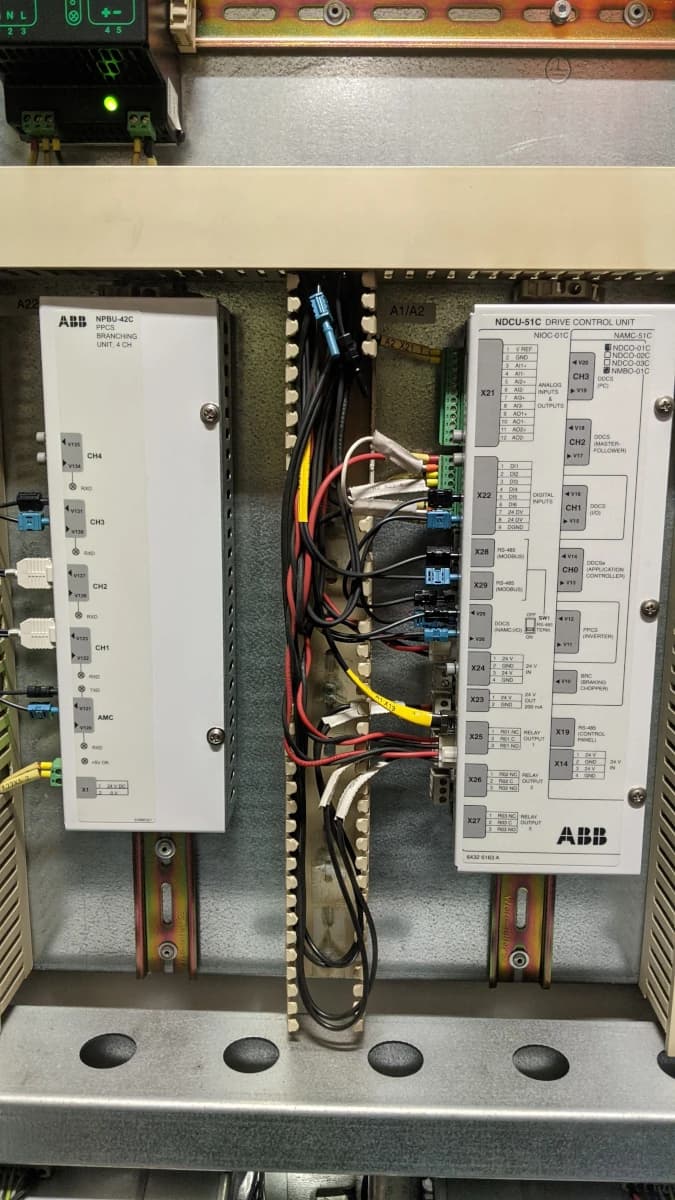
Component-Level Repairs
We repair at component level — not just by swapping sub-assemblies. This approach reduces cost, avoids unnecessary lead times for major assemblies, and is often the only viable option for legacy ACS600 installations where complete drive replacement would involve significant re-engineering.
- IGBT power module replacement — The most common failure point in both ACS600 and ACS800 drives. We replace individual modules with OEM-equivalent parts and verify gate driver circuit integrity before commissioning.
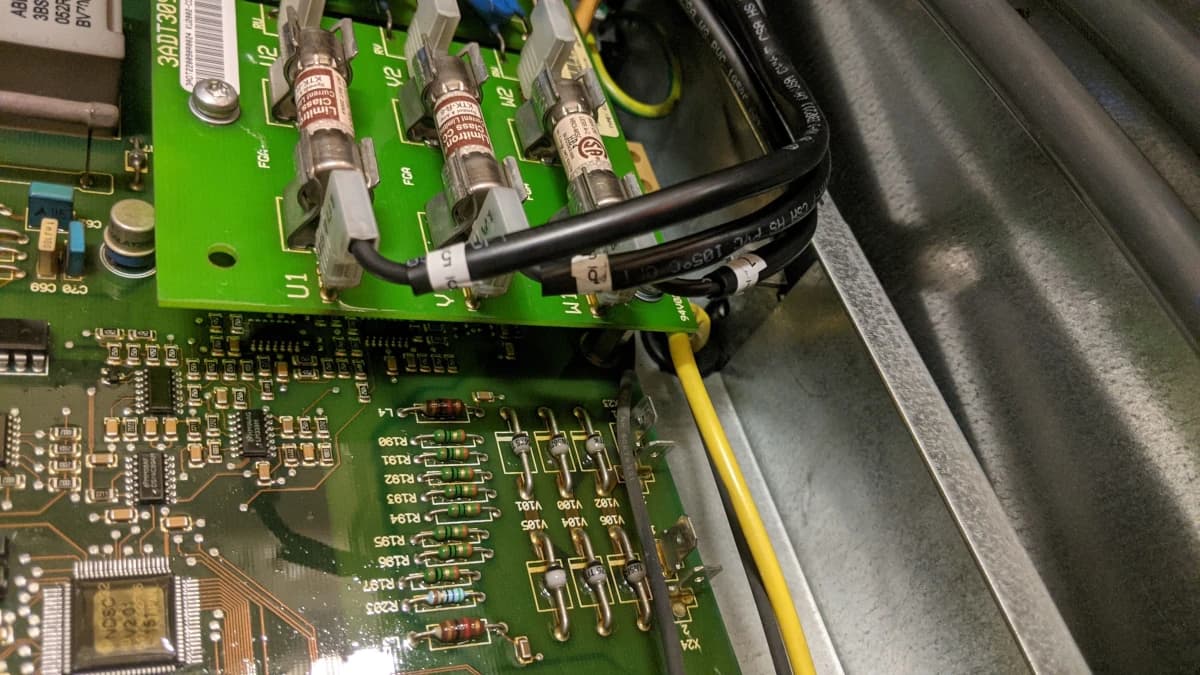
- Control board repair and replacement — RMIO, AINT, AINT, RRFC, and RMUS boards for ACS600; RMIO, RDCO, RINT, and RCON for ACS800. Fault isolation to board level and component replacement where practical.
- DC bus capacitor replacement — Electrolytic capacitors degrade over time, especially in warm environments. We measure ESR and capacitance against OEM specifications and replace as a complete bank where degradation is confirmed.
- Cooling fan replacement — Failed fans trigger Fan Fault alarms and cause thermal protection trips. We stock common ACS600 and ACS800 fan types for fast turnaround.
- Gate driver card repair — Intermittent IGBT firing faults caused by ageing gate driver circuits are repaired at board level.
- Contactor and fuse replacement — Main circuit and auxiliary contactors, pre-charge resistors, and AC fuse sets.
Drive Electronics & Control Repair
The ACS600 and ACS800 combine high-power inverter electronics with sophisticated digital control systems. We service both layers:
- Firmware updates and parameter backup — Loading current firmware where stability improvements address known issues; backing up and restoring drive parameters after any board replacement
- Fieldbus adapter repair — PROFIBUS (RPBA), Modbus RTU (RMBA), and DeviceNet (RDNA) adapter cards that manage communication between the drive and the vessel automation system
- PLC and control interface repair — Where the fault lies in the thruster control PLC, HMI panel, or I/O modules rather than the drive itself, we diagnose and repair the full control chain
- Speed reference signal verification — Checking analogue speed demand signals (4–20 mA, ±10 V) and digital command interfaces for integrity
Overhaul & Refurbishment
A full overhaul returns the drive to a condition approaching original specification and significantly extends service life — particularly important for ACS600 drives where new unit replacement is no longer straightforward.
- Full strip and visual inspection of all assemblies
- IGBT module integrity testing and selective replacement
- DC bus capacitor bank measurement and replacement
- All cooling fans replaced as standard
- Thermal paste renewal on all power semiconductors
- Control board cleaning, inspection, and functional test
- Parameter backup, drive commissioning, and load test
- Overhaul report with before/after test data
Upgrades & Retrofits
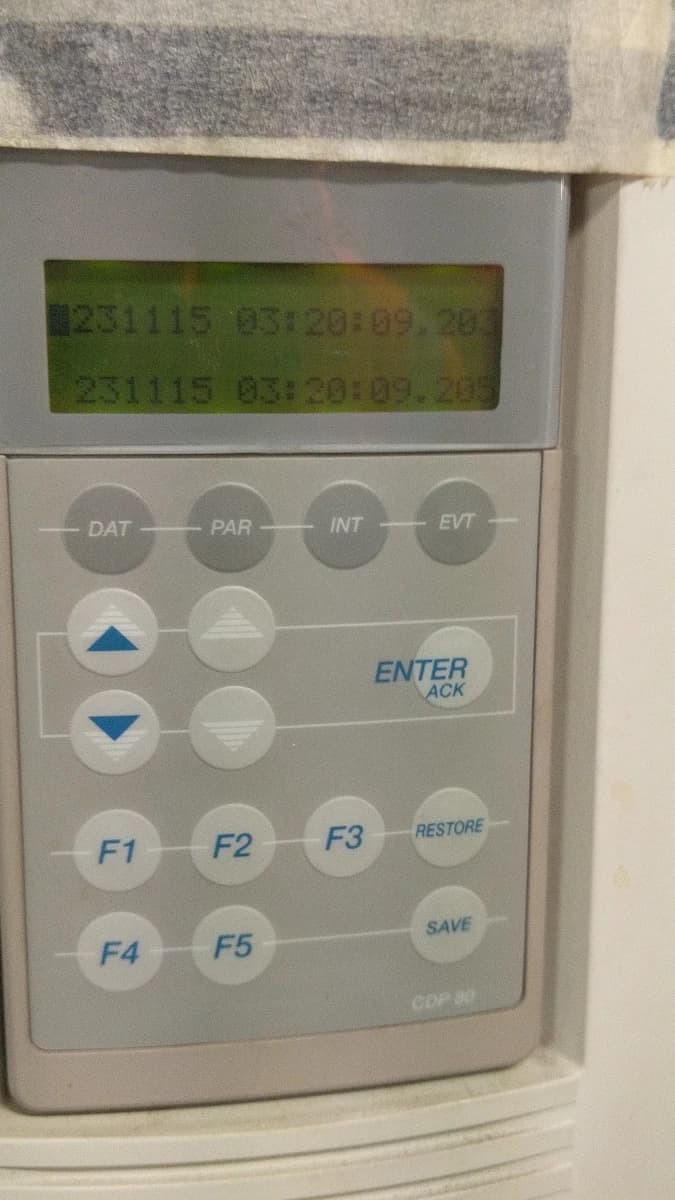
Where an ACS600 drive has reached the point where repair cost approaches replacement cost — or where OEM spare parts availability has become a critical risk — we manage the full upgrade to ACS800 or an equivalent current-generation drive.
- ACS600 to ACS800 upgrade — Mechanical fitment study, power cable assessment, control interface mapping, and parameter translation
- Motor compatibility check — Verifying the existing motor windings are compatible with the new drive's DTC algorithm and output filter requirements
- Communication interface upgrade — Updating fieldbus configuration and PLC interface where the vessel automation system requires changes
- Remote monitoring installation — Adding ABB Drive Composer Pro logging or third-party condition monitoring to enable predictive maintenance
- Energy-efficient motor upgrade — Recommending permanent-magnet motor options where the efficiency gain justifies capital cost over the remaining vessel life
Spare Parts Supply
Sourcing ACS600 and ACS800 spare parts is increasingly challenging as the ACS600 reaches end-of-life and supply chains for specific assemblies tighten. We maintain stock of the most common failure items and have established supply relationships for hard-to-find components.
- IGBT power modules (ACS600 and ACS800 compatible)
- Control boards: RMIO, AINT, AINT, RDCO, RINT series
- Cooling fans (standard and marine-grade variants)
- DC bus capacitor banks
- Gate driver cards and pulse transformers
- Fieldbus adapter cards (RPBA-01, RMBA-01, RDNA-01)
- Pre-charge resistors and charging contactors
- Control panel keypads and display units
For urgent requirements, include the drive serial number, model designation (ACS600 / ACS800), and the specific part number or description when contacting us — this allows us to confirm availability and provide an accurate lead time.
Emergency Fault Recovery & 24/7 Breakdown Response
A thruster drive failure in port or at sea is a vessel off-hire event. Our emergency response service is designed to minimise the time between the fault and the vessel returning to service.
Our emergency service includes:
- Remote triage and initial fault guidance by phone or video call — immediately
- Engineer dispatch to vessel location — UK ports typically within 4–8 hours
- On-site diagnosis and temporary repair where possible to get the vessel moving
- Fast-tracked parts sourcing from our stock or supply network
- Workshop repair with priority scheduling and courier return
Common Azimuth Drive Faults and Failure Modes
Understanding typical failure patterns helps you anticipate problems before they cause unplanned downtime. These are the faults our engineers encounter most frequently across ACS600 and ACS800 thruster drive installations.
IGBT Power Module Failure
IGBT (Insulated Gate Bipolar Transistor) modules are the switching devices in the inverter section of the drive. They switch at high frequency to synthesise the variable-frequency AC voltage delivered to the motor. Failure symptoms include:
- Drive trips on Overcurrent or Short Circuit immediately on start
- Earth Fault trip at low speed or on direction reversal
- Asymmetric phase current readings (one phase significantly different from the others)
- Visible damage to module surface (blackening, cracks) on physical inspection
IGBT failure is more common on ACS600 drives — the modules are now significantly aged and were not designed for 20+ years of operation. Thermal cycling from repeated starts and stops accelerates junction fatigue.
DC Bus Capacitor Degradation
The DC bus capacitor bank smooths the rectified supply voltage. As electrolytic capacitors age, their capacitance decreases and equivalent series resistance (ESR) rises. This causes:
- Increased voltage ripple on the DC bus, causing erratic motor current
- DC Overvoltage trips during regenerative braking (thruster decelerating rapidly)
- DC Undervoltage trips when input supply dips briefly during heavy load switching
- Premature pre-charge circuit faults
Cooling System Failure
Marine environments are hostile to cooling fans — salt-laden air, vibration, and continuous duty cycles cause premature bearing wear. A failed cooling fan triggers thermal protection of the drive:
- INV Alarm Fan Y42.1 Failed — Internal cooling fan fault (ACS600/ACS800 drive fan failure)
- DSU1 Alarm Fan Y17 Fail — Drive supply unit fan alarm
- Intermittent IGBT Overtemperature trips that clear after a cool-down period but return under load
Control Communication Faults
ACS600/ACS800 drives communicate with the thruster control system via fieldbus (PROFIBUS, Modbus) or hardwired I/O. Communication faults are a common source of nuisance trips — the drive is electrically healthy but cannot receive a valid command:
- Azimuth Converter Communication Fault — Loss of fieldbus communication between drive and vessel automation system
- DSU4 Alarm Net Alarm / DSU3 Alarm Net Alarm / DSU2 Alarm Net Alarm — Drive Supply Unit network (fieldbus) communication alarms
- Root causes: damaged fieldbus cable, connector corrosion, adapter card fault, PLC configuration mismatch, or network termination failure
Auxiliary and I/O Power Supply Faults
The drive's internal power supplies feed control electronics, fans, and I/O modules. PSU degradation causes:
- Aux Voltage Failure — Loss of internal auxiliary supply voltage
- IO Voltage Failure 1 / IO Voltage Failure 2 — I/O board supply voltage out of tolerance
- Erratic I/O behaviour, random output toggling, or loss of feedback signals
Drive Supply Unit (DSU) Module Faults
Multi-drive ACS800 cabinet configurations use Drive Supply Units (DSUs) that provide rectified DC bus power to multiple inverter units. DSU module faults affect the entire thruster drive system:
- DSU2ModU1.1RunFail / DSU2ModU1.2RunFail — DSU module 1 or 2 run failure
- DSU1ModU1.1RunFail / DSU1ModU1.2RunFail — Primary DSU module run failure
- DSU Critical Temp — DSU section overtemperature — thermal protection active
- DSU2 Alarm Main U Volt — DSU main input voltage alarm
Emergency Stop and Interlock Faults
- Emergency Stop Sign Fail — Emergency stop circuit integrity fault — the drive cannot confirm the E-stop loop is closed and healthy
- WatchdogBypassed — The drive watchdog circuit has been bypassed; this is a safety-critical alarm that requires immediate investigation
- WCU Alarm — Water Cooling Unit alarm — relevant on water-cooled drive installations
ACS600 / ACS800 Azimuth Drive Alarm and Fault Code Reference
The following alarm and fault codes are frequently reported by vessels with ACS600 and ACS800 azimuth thruster drives. Each code has a known set of root causes and a corresponding diagnostic pathway. Our engineers are experienced with all of these fault conditions.
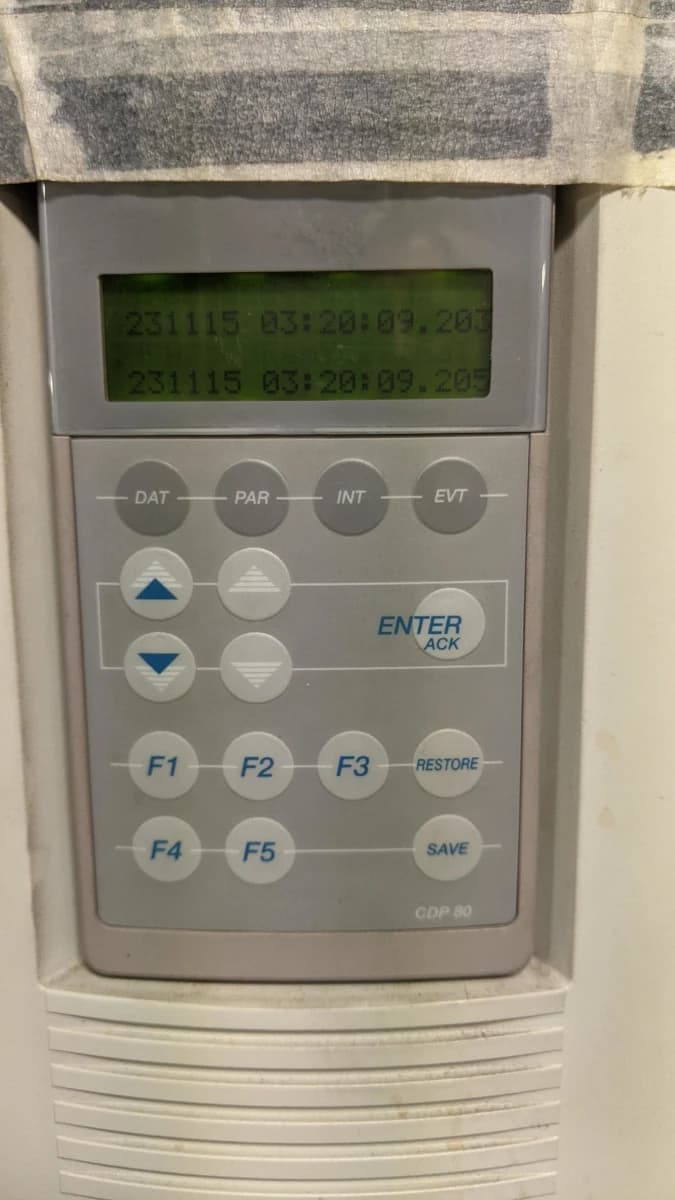
| Alarm / Fault Code | Typical Cause | Urgency |
|---|---|---|
| WatchdogBypassed | Watchdog circuit bypass — hardware or software fault | Critical — stop immediately |
| INV Alarm Fan Y42.1 Failed | Internal drive cooling fan failure | High — thermal trip imminent |
| DSU4 Alarm Net Alarm | Fieldbus communication loss — DSU4 network fault | High — drive may not accept commands |
| WCU Alarm | Water cooling unit fault (water-cooled drives) | High — overtemperature risk |
| DSU3 Alarm Net Alarm | DSU3 fieldbus network alarm | High |
| Drive Fault (general) | Multiple possible root causes — read sub-codes | High — full diagnostic required |
| DSU2ModU1.1RunFail | DSU2 Module U1.1 run failure — rectifier module | High |
| DSU2ModU1.2RunFail | DSU2 Module U1.2 run failure — rectifier module | High |
| DSU1ModU1.1RunFail | Primary DSU module U1.1 run failure | Critical |
| DSU1ModU1.2RunFail | Primary DSU module U1.2 run failure | Critical |
| Emergency Stop Sign Fail | E-stop circuit open or integrity fault | Critical — E-stop system compromised |
| DSU2 Alarm Main U Volt | DSU2 main input voltage out of range | High — check incoming supply |
| Aux Voltage Failure | Internal auxiliary PSU fault | High — control system at risk |
| IO Voltage Failure 1 | I/O board supply voltage fault — board 1 | High — I/O unreliable |
| IO Voltage Failure 2 | I/O board supply voltage fault — board 2 | High — I/O unreliable |
| DSU Critical Temp | DSU section overtemperature — cooling failure | Critical — immediate shutdown required |
| DSU1 Alarm Fan Y17 Fail | DSU1 cooling fan failure | High — thermal protection at risk |
| THR Fault Converter Tripped | Thruster converter protection trip — check sub-fault | High — thruster offline |
| Azimuth Converter Communication Fault | Loss of communication between drive and DP/thruster control system | High — thruster not controllable |
| Intermittent Azimuth Driver Trip Fault | Recurring drive trips — pattern analysis required | Medium–High — root cause investigation |
This reference is a starting point. Definitive diagnosis requires reading the full fault history (Parameters 1.05–1.07 on ACS600; Event Log on ACS800), live motor current data, and physical inspection of the drive hardware. Contact our engineers for guided remote diagnosis.
Our Repair Process — Step by Step
Every azimuth drive repair we undertake follows a structured process designed to deliver a reliable, documented result — not just a drive that starts once and fails again six months later.
- Rapid triage and remote diagnostics — Initial fault discussion, fault code review, and preliminary diagnosis by phone or video call. We provide immediate guidance on safe operation decisions and identify whether on-site or workshop repair is most appropriate.
- On-site inspection or unit collection — Engineer attendance at the vessel for on-site diagnosis and repair, or safe unit removal and transport to our workshop — whichever is fastest and most practical for the fault type.
- Detailed inspection report and quotation — Full written report of findings with photographic evidence, recommended repair scope, parts list, cost, and timeline. No hidden charges.
- Repair or overhaul with documentation — Component replacement, functional testing at each stage, and a complete repair record including before/after test data.
- Commissioning and load testing — Drive commissioned with parameters verified against original configuration. Load test confirms correct operation under representative thruster demand.
- Re-installation and sea trial support — Re-installation at the vessel with full system checkout. Remote support available during initial sea trial if required.
- Post-service support and maintenance plan — 12-month warranty on all repair work. We can provide a tailored preventive maintenance schedule based on the drive's age, condition, and operational profile.
Why Choose Ashmit Engineering for Azimuth Drive Repairs
- ACS600 and ACS800 specialists — Deep hands-on experience with both platforms across the full range of marine thruster installations
- Component-level repair capability — We repair at the component and board level, not just swap assemblies — reducing cost and lead time
- OEM-compatible parts — We source genuine ABB parts and quality-assured OEM-equivalent components for legacy ACS600 where genuine parts are unavailable
- 24/7 emergency response — Emergency engineers available around the clock for vessel breakdown situations
- On-site and workshop service — We attend the vessel or take the unit to our workshop — whatever gets the vessel back to service fastest
- Full documentation — Every repair comes with a written report, test data, and parameter record — essential for class society requirements and vessel records
- 12-month warranty — All repair work is covered by our 12-month parts and labour warranty
- UK-wide and European port coverage — We cover major UK ports and can mobilise to European ports — Bergen, Rotterdam, Hamburg, and beyond
Frequently Asked Questions — Azimuth Drive Repairs
How long does a typical azimuth drive overhaul take?
A standard ACS600 or ACS800 overhaul in our workshop takes 3–5 working days from receipt of the unit to despatch, depending on the extent of component replacement required. Emergency repairs where a single identified component has failed can be turned around faster — sometimes within 24–48 hours if the part is in stock. We always provide a firm timeline in our written quotation before work begins.
Can you repair non-ABB azimuth drives?
Yes. While our primary specialisation is ABB ACS600 and ACS800 drives, we also service Siemens SIMOVERT and SINAMICS drives, Danfoss/Vacon NX Marine drives, and other VFD platforms used in thruster applications. Contact us with the drive manufacturer and model — we will confirm capability before you commit to sending the unit.
Do you provide temporary replacement drives while mine is being repaired?
We maintain a limited stock of loan/exchange ACS800 drive units for vessel operators facing critical downtime situations. Exchange unit availability depends on the specific power rating and configuration required — contact us at the point of failure and we will advise what options exist to minimise vessel off-hire time.
What testing is carried out after repair?
Every repaired drive is subject to a full commissioning sequence before despatch: DC bus pre-charge test, insulation resistance verification, gate driver firing verification across all IGBT modules, no-load run at low speed, and a load test at representative demand levels. We provide a test report with measured values as part of the repair documentation package.
My vessel has an ACS600 — is it worth repairing or should I upgrade to ACS800?
This depends on the drive's condition and the remaining operational life of the vessel. A well-maintained ACS600 that has experienced a first major failure — typically an IGBT module or capacitor bank — can often be restored to reliable service at significantly lower cost than an ACS800 replacement. However, if the drive has experienced multiple failures, if OEM parts for critical sub-assemblies are no longer available, or if the vessel will operate for more than 5 further years, an upgrade to ACS800 is usually the more cost-effective long-term decision. We provide an honest assessment as part of our inspection report — we do not recommend upgrades where a repair will serve the vessel well.
We have a WatchdogBypassed alarm — is the thruster safe to operate?
No. The watchdog circuit monitors the drive's control processor and initiates a controlled shutdown if the processor locks up or fails. With the watchdog bypassed, the drive has no automatic protection against control processor failure — which could result in an uncontrolled drive state. The thruster should not be used for critical manoeuvres until this alarm has been investigated and resolved by a qualified engineer. Contact us for remote triage guidance.
Our azimuth drive trips intermittently — it starts fine but trips after a few minutes under load. What causes this?
Intermittent trips under load are most commonly caused by: (1) a partially failed IGBT module that fails when it reaches operating temperature; (2) a degraded DC bus capacitor bank causing DC overvoltage trips during load transients; (3) a failing cooling fan that allows drive temperature to rise gradually until the thermal protection trips; or (4) a loose connection in the power circuit that develops increased resistance under thermal expansion. An Intermittent Azimuth Driver Trip Fault should be investigated promptly — intermittent faults always become permanent faults if left unaddressed. Our engineers can often identify the specific cause remotely by reviewing the drive fault log timestamps and thermal data.
Request a Quote or Emergency Support
Whether you need an urgent fault fixed today, a scheduled overhaul during drydock, or an honest assessment of whether your ACS600 is worth repairing, our engineers are ready to help.
- Vessel name and current location / port
- Drive model (ACS600 / ACS800) and serial number (on the drive nameplate)
- Fault codes displayed on the drive panel
- Last known service date and any recent changes to vessel operation
- Whether you need on-site attendance or workshop repair
🔧 Report an Azimuth Drive Fault — 24/7 Emergency Support → | ⚙️ Request a Repair Quote or Parts Enquiry → | 📋 Book a Drive Condition Assessment →