What Do DP Class Numbers Actually Mean?
DP1, DP2, and DP3 are defined by the IMO and classification societies — DNV, Lloyd's Register, and Bureau Veritas.
Each class describes the level of redundancy in a vessel's DP system and the consequence a single equipment failure can have on position-keeping.
The higher the class number, the more redundancy is required — and the safer the vessel is when operating over sensitive seabed infrastructure or conducting diver support operations.
DP Equipment Classes at a Glance
| Class | Failure Consequence | Redundancy Required | Typical Vessel Types |
|---|---|---|---|
| DP1 (Equipment Class 1) | Single failure may cause loss of position | No redundancy required | Survey vessels, small OSVs, ferries |
| DP2 (Equipment Class 2) | Single failure must NOT cause loss of position | Redundant active components | PSVs, AHTSs, well intervention vessels |
| DP3 (Equipment Class 3) | Any single failure including fire or flood must NOT cause loss of position | Full physical separation — redundant systems in separate watertight compartments | Drillships, heavy lift, diving support, FPSO |
DP1: No Redundancy, Still Useful
DP1 vessels have a single DP control computer, a single set of thrusters, and no requirement for active system redundancy. A component failure can lead to loss of position — this is acceptable where the consequence of position loss is low (open water surveys, buoy tending, cable laying in non-sensitive areas).
DP1 is the minimum classification for vessels where DP is used as a convenience rather than a safety critical function. It is not permitted for operations over subsea infrastructure.
DP2: The Industry Standard for Offshore Operations
DP2 requires that any single active component failure — a thruster, UPS, sensor, or control computer — does not result in loss of position.
All active components must be duplicated. The vessel needs at least two independent DP controllers, two sets of position reference systems, and multiple thruster groups.
However, DP2 does not require physical separation. Both redundant controllers can be in the same room. A fire or flood in that space can still disable the entire DP system.
DP3: Physical Redundancy and Separation
DP3 extends DP2 by requiring redundant systems to be physically separated by A60-rated fire divisions, with dedicated power supplies running through separate cable routes.
The vessel must maintain position following any single failure — including fire or flooding in any one compartment.
DP3 makes vessels significantly more complex and costly to build, but it is mandatory for the highest-risk offshore operations: drilling, well intervention, and diver support near wellheads and risers.
Control System Implications
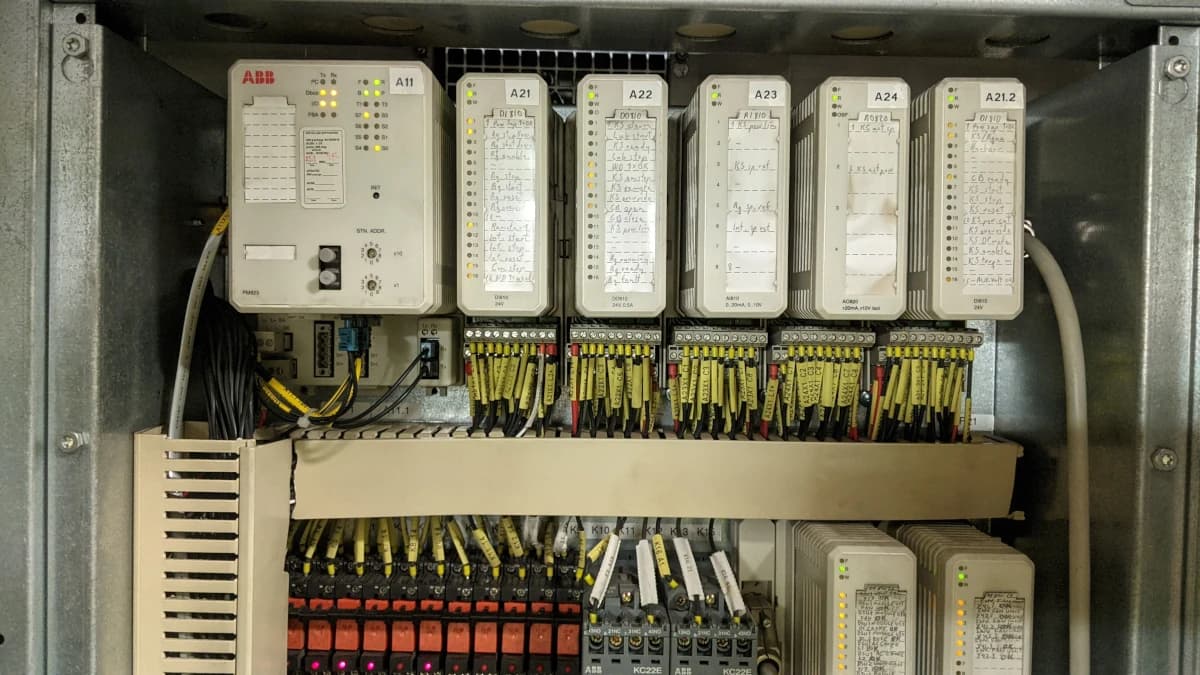
DP class affects not just the DP computer — it shapes the entire integrated control and power management architecture.
At Ashmit Engineering we design and upgrade marine control systems for DP2 and DP3 applications, including thruster control integration, power management systems, and redundant network architectures that meet classification society requirements.
Marine Propulsion Control Systems — Complete Guide → | Learn about our marine control system capabilities → | Case Study: Emergency Generator PLC — OSV, Aberdeen → | Speak to a marine systems engineer →
Frequently Asked Questions: DP1, DP2 & DP3
Common questions about dynamic positioning classification, vessel requirements, and what each DP class means for your control systems and operations.